-
name
-
nl
Programmatoelichting 'La Commedia'
-
headline
-
en
Program notes 'La Commedia'
-
nl
Programmatoelichting 'La Commedia'
-
creator
-
Louis Andriessen
-
articleBody
-
en
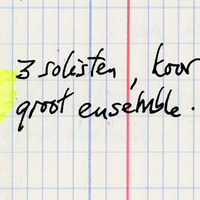
Louis Andriessen on La Commedia<br/>2006<br/><br/>Hal Hartley and I have the idea to make a 'film opera' of about 100 minutes. <br/>I conceived the piece in five movements of approximately the same length (18 minutes). <br/><br/>Part 1: The City of Dis or: The Ship of Fools<br/>It starts with a kind of 'American in Paris' lively introduction. This is followed by an opening chorus sung in Latin about drunken people. It is the first verse of Das Narrenschiff (The Ship of Fools), which is actually a verse from the Bible, from the Psalms to be more precise.<br/>A second choir follows in sixteenth century Dutch, telling us which people may go into the Blue Bark (a Dutch Ship of Fools). Preferably people who gamble, jump and dance and love beautiful women. Then Beatrice appears and explains (in Italian) about the request to help Dante on his way to heaven. The rest is all sung in English. In the meantime we find some men in a boat on their way to Dis, the burning city in Hell. On the roof of the flaming towers they see the screaming Furies. All very exciting music. At the end a person walks over the water and Dante says: I was certain that she was sent from heaven. <br/><br/>Part 2: Racconto dall'Inferno<br/>Dante, sung by Cristina Zavalloni, my amazing Italian singer, tells a funny story about one of the upper devils informing him about the right direction. The upper devil gives Dante an escort of 10 other devils. Very frightening. They start walking. A very early Shostakovitch-march.<br/><br/>Part 3: Lucifer<br/>A large instrumental introduction of the horror of Inferno. The (small) choir describes how Lucifer looks like. Then Lucifer appears and sings a long monologue about his Revenge and his Triumph. In his last phrase he quotes the Creator, who screams: "Alas! Now I deplore that I ever created mankind!" <br/>Until here the vocal score is ready, and the orchestral score of Part 1 and 2.<br/><br/>Part 4: The Garden of Earthly Delights<br/>Part 1 and 4 have titles of paintings of the amazing Dutch painter Hieronymus Bosch. Hopefully the visualisation of La Commedia will remind you of the horrible, funny, surrealist images of Bosch. In part 4 we meet an actor (Dante?) and a singer (the angel from part 2?) in a pleasant, sensual situation. They sing a love duet. <br/>But first Dante meets his friend Casella, a musician, who as a welcome greeting, sings one of Dante's beautiful songs for him. Dante is being helped across the river Lethe and he sees passing an impressive procession of great beauty. It may remind us also of a kind of Carnaval in Rio. At the end, after a sudden metamorphosis, the most beautiful float has changed into a monster with seven heads. This monster contains The Giant and The Whore. <br/>Strange duet. Finally we sense that we approach Paradise.<br/><br/>Part 5: Paradiso<br/>18 minutes of solemn A major beautiful music about Love, the Stars and Eternity. Sung by Beatrice (admired by Dante), choir, children, and the instruments, mostly consisting of plucked and bowed strings. <br/><br/>The orchestra will not be in a pit, but on the floor, in front of the stage, where the film images will be projected. There will be a catwalk from front stage, partly over the ensemble, to something like the first balcony. There are only three soloists: two female singers, one singing actor, 8 part choir and an instrumental ensemble of about 30 musicians.
-
nl
La Commedia is een opera van ongeveer honderd minuten, bestaande uit vijf delen van gelijke lengte. Louis Andriessen stelde zelf het libretto samen uit teksten van Dante, Vondel en andere auteurs. De voorstelling wordt geënsceneerd door filmmaker Hal Hartley en bevat veel filmprojecties. <br/><br/>Reinbert de Leeuw leidt het ASKO Ensemble en Schönberg Ensemble in de wereldpremière van La Commedia. De uitvoeringen van deze coproductie van De Nederlandse Opera en het Holland Festival vinden plaats in Koninklijk Theater Carré Amsterdam. <br/><br/>Er zijn drie hoofdpersonen; twee zangeressen en een zingende acteur. <br/>De Italiaanse zangeres en componiste Cristina Zavalloni vertolkt Dante op zijn tocht door hel, louteringsberg en hemel, zoals beschreven in zijn Divina Commedia. Tevens speelt zij een tv-persoonlijkheid die verslag doet van het Europese nieuws. <br/>Claron McFadden speelt Beatrice, Dante’s grote liefde en gids in de hemel. <br/>De Nederlandse acteur Jeroen Willems speelt in deel III Lucifer, de gevallen engel. In deel V vertolkt hij Cacciaguida, een kruising tussen mopperpot en gangster. <br/><br/>De muziek van La Commedia wordt uitgevoerd door een koor van acht solostemmen en een instrumentaal ensemble van ongeveer veertig musici. Zij zitten niet in de orkestbak, maar op de toneelvloer voor het podium. Daar worden op een groot scherm de avonturen geprojecteerd van het Verschrikkelijk Orkest van de 21e Eeuw (ook bekend als het gilde van de Blauwe Schuit), een soort impro-ensemble dat problemen heeft met de politie. Ondertussen tillen bouwvakkers met groot materieel honderden etalagepoppen uit de orkestbak naar een plek op het toneel. <br/><br/>Deel I: De Stad van Dis of: Het Narrenschip opent met een Latijnse tekst uit het voorwerk van Das Narrenschiff, gevolgd door de zestiende-eeuwse wervingstekst voor het Gilde van de Blauwe Schuit. Beatrice verschijnt en vertelt over Vergilius’ verzoek om Dante te helpen op zijn weg door het hiernamaals. Een paar mannen in een boot zijn op weg naar Dis, de brandende stad in de Hel. Op het dak van de vlammende torens zien ze schreeuwende furiën. Tot slot loopt er iemand over het water. Dante besluit: 'Ik wist zeker dat zij door de hemel gezonden was.'<br/><br/>In Deel II: Racconto dall'Inferno vertelt Dante een grappig verhaal over een van de opperduivels, die hem de weg wijst. Deze Malacoda geeft Dante een escorte van tien angstwekkende duivels. Terwijl ze voortsjokken door de hel, klinkt er een eigenaardige mars.<br/> <br/>In Deel III, Lucifer, brengt een lange instrumentale introductie brengt ons in de diepste verschrikkingen van de Hel. Het koor beschrijft Lucifer. Hij is jaloers omdat God de mens heeft geschapen naar Zijn beeld en gelijkenis. Hij brult zijn wraakzucht uit en triomfeert. De teksten van deel III komen uit twee toneelstukken van Vondel.<br/><br/>Deel IV, De Tuin der Lusten, ontleent, evenals Deel I, zijn titel aan een schilderij van Jeroen Bosch. Dante ontmoet zijn overleden vriend Casella, een musicus. Hij zingt een van Dante’s prachtige sonnetten. Cristina zingt een lied over een griezelige slang, die verjaagd wordt door grote vogels. Dante wordt over de rivier de Lethe geholpen en ziet een indrukwekkende optocht van grote schoonheid. Cristina raakt onder een van de wielen (of komt onder een auto) en sterft. Het koor zingt een tekst uit het Hooglied gewijd aan de Bruid van de Libanon. <br/><br/>Na een onmerkbaar begin ontwikkelt zich in Deel V, Luce Etterna, een muzikaal licht, onderbroken door een brutaal kinderkoor dat een tekst uit het Requiem zingt. Beatrice vertelt dat dit het licht van de liefde is. Het geluid van een sterrenhemel verbindt de twee vrouwelijke solisten. Cristina bezingt de hemellichamen en de muziek der sferen. Zij wordt onderbroken door Cacciaguida, die zich beklaagt over de mensen in Florence. Het licht van de eeuwigheid besluit het werk.
-
Identifier
-
ark:/23946/bojoSK
 La Commedia